The Problem: Crypto That Sits Idle
If you hold crypto in a treasury or trading portfolio, there is a good chance some of it is doing nothing. It sits in a wallet, exposed to market volatility, generating zero yield. Meanwhile, staking networks are offering annual percentage yields that, over time, meaningfully compound your holdings.
The challenge is not a lack of opportunity — it is a lack of visibility. Most teams do not know how much they are earning from staking, which assets could be staked but are not, or whether their current staking strategy is optimal. Spreadsheets and block explorers fill the gap poorly. Accounting for staking rewards at tax time adds another layer of friction.
Compound is UNOCU's answer to this problem. It is a staking rewards tracking and compound interest tool built for startups, traders, and crypto-native businesses that want to grow their treasury through staking — and want clear, organised data on every reward earned.
Who Compound Is For
Compound is designed for three audiences:
•Startups managing a crypto treasury. If your company holds ETH, SOL, or other stakable assets as part of its operating capital, Compound shows you exactly how much yield you are generating and where you could be earning more.
•Traders looking to grow holdings. Active traders often hold assets between trades. Staking those assets during holding periods turns idle capital into a yield-generating position.
•Anyone holding crypto that could be staked. If you have assets sitting in a wallet and you have not explored staking, Compound surfaces the opportunity and gives you the data to make an informed decision.
Whether you are staking natively on Solana, using liquid staking through Lido (stETH), Rocket Pool (rETH), or Coinbase (cbETH) on Ethereum, Compound pulls it all into one view.
How to Use Compound
Compound is organised into two sections, each serving a distinct purpose. The first helps you track what you are already earning. The second helps you find ways to earn more.
Section 1: Staking Rewards
This section is your performance dashboard. It answers the fundamental questions: how much am I earning, where is it coming from, and how has performance changed over time? It contains five widgets:
•Staking Overview — A top-level summary of key performance indicators for your staking portfolio, including total staked value, total rewards earned, and current blended APY.
•Rewards Earnings Chart — A visual timeline showing rewards earned over days, weeks, or months. This makes it simple to see whether your earnings are growing, flat, or declining.
•Staking Breakdown — A detailed breakdown by asset, provider, and network. If you stake ETH across Lido and Rocket Pool, for example, this widget shows you exactly how each position is performing.
•APY Tracker — Historical staking rates charted over time. APYs fluctuate, and tracking them helps you decide whether to stay with a provider or move to a better option.
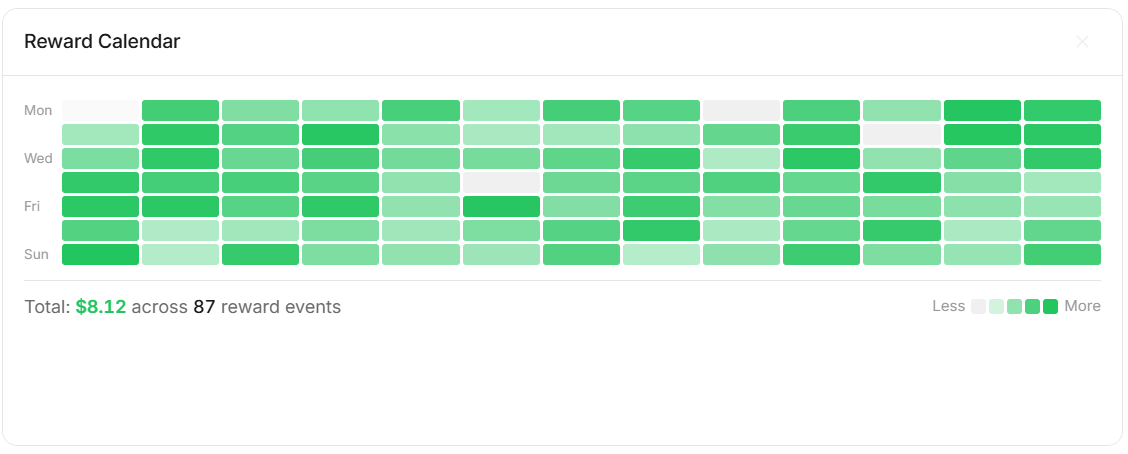
•Reward Calendar — A GitHub-style heatmap that shows daily reward activity at a glance. Darker cells mean higher reward days. This is useful for spotting patterns and confirming that rewards are being received consistently.
Section 2: Earn More
Tracking what you earn is important. Finding ways to earn more is where Compound becomes a strategic tool. This section contains five widgets designed to surface opportunities and help you model decisions:
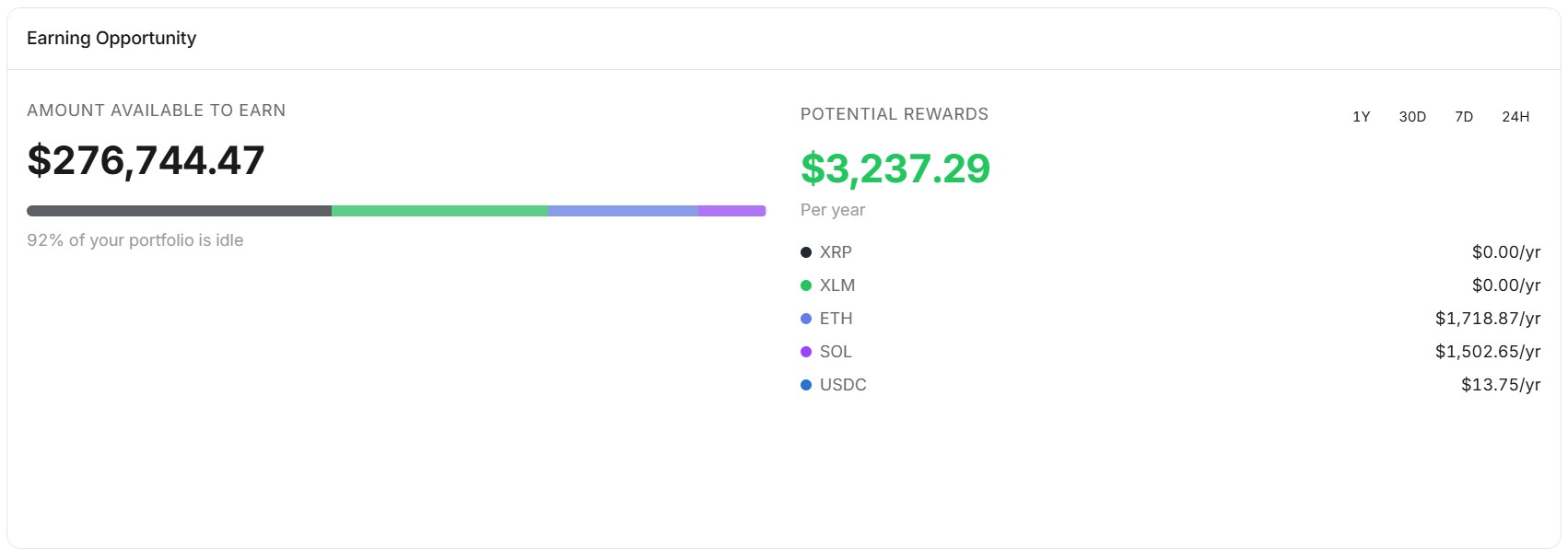
•Earning Opportunity — Calculates the potential yield on your currently unstaked assets. This is the clearest signal of money left on the table.
•Available Assets Table — Lists every stakable asset in your portfolio, complete with current APY badges and direct stake calls to action. No guesswork about what is available.
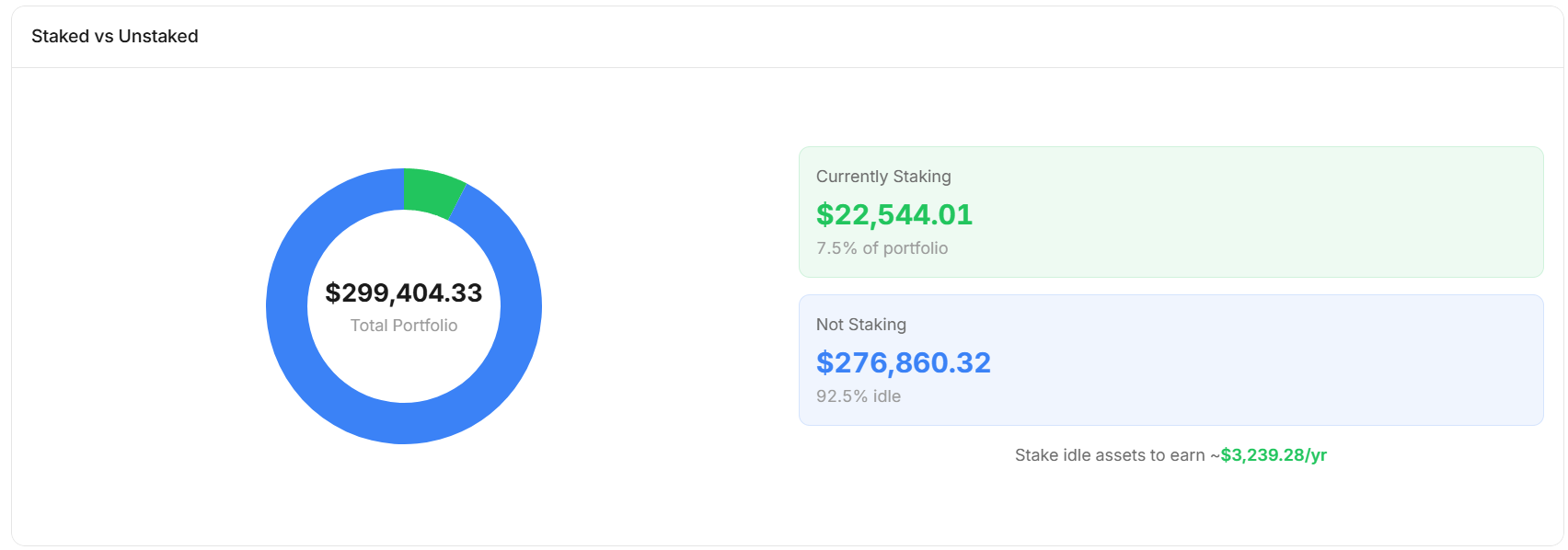
•Staked vs Unstaked Donut — A visual split showing how much of your portfolio is staked versus sitting idle. A quick check on allocation balance.
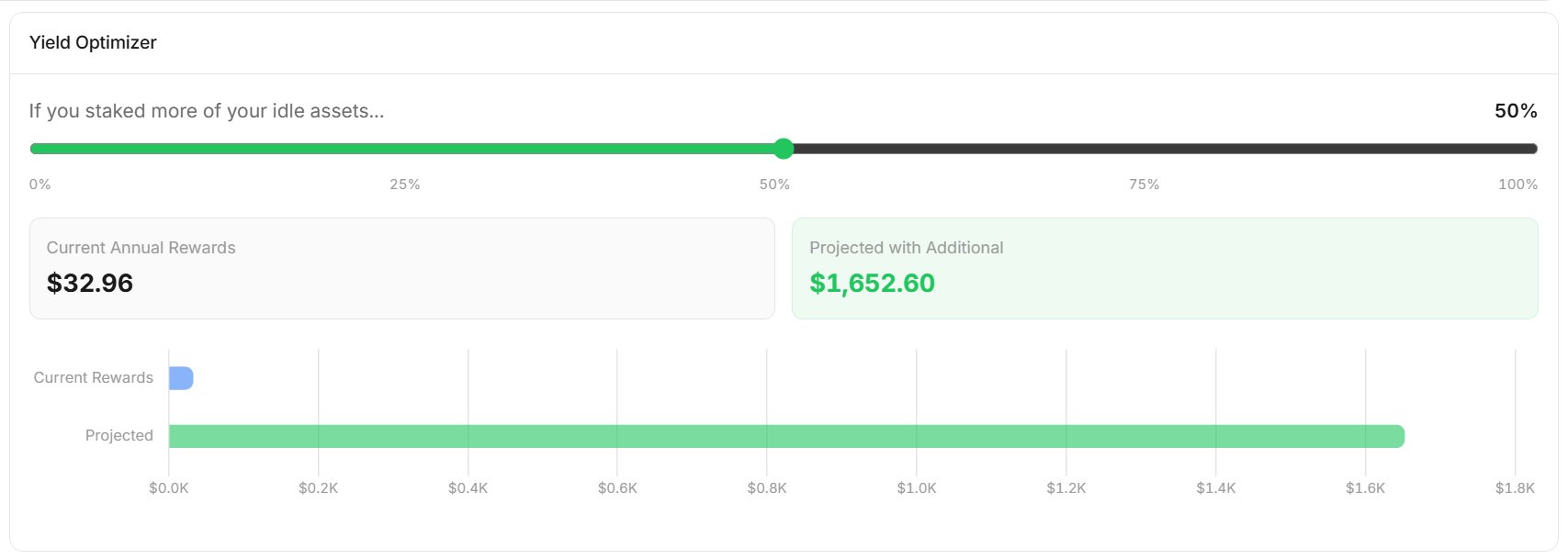
•Yield Optimizer — A what-if slider that lets you model different staking scenarios. Adjust allocation percentages and see projected returns. This is particularly useful for teams deciding how much of their treasury to commit to staking.
•Reward Milestones — Gamified progress tracking for staking goals. Set a target (e.g., earn 1 ETH in staking rewards this quarter), and Milestones tracks your progress toward it.
Feature Highlights
Across both sections, Compound provides ten widgets that work together to give you a complete staking picture. The Staking Rewards section is built for monitoring — it tells you what is happening now and what happened in the past. The Earn More section is built for action — it tells you what you should consider doing next.
A few details worth noting:
•The APY Tracker is not just a snapshot. It stores historical rate data, so you can see how a provider's APY has trended over weeks and months. This is critical for making informed decisions about where to stake.
•The Yield Optimizer is a modelling tool, not a recommendation engine. It shows you projected outcomes based on the scenarios you define. You remain in control of every decision.
•The Reward Calendar gives you a daily-level view that most staking dashboards lack. If rewards stop arriving, you will know immediately rather than discovering it weeks later.
•The Earning Opportunity widget quantifies the cost of inaction. Seeing a specific dollar figure for unrealised yield is a powerful motivator for teams that have been meaning to stake but have not gotten around to it.
Staking Strategy: What to Think About
Compound gives you the data. Here is how to think about using it:
•Diversify across providers. Concentrating all staked assets with a single provider introduces unnecessary risk. Spread your positions across different validators or liquid staking protocols. The Staking Breakdown widget makes it easy to see your current distribution.
•Track APY changes. Staking yields are not fixed. They shift based on network conditions, validator performance, and protocol economics. Use the APY Tracker to monitor these changes and reallocate when it makes sense.
•Reinvest rewards for compound growth. Staking rewards that sit idle are themselves unstaked. Periodically rolling rewards back into staking positions creates a compounding effect that materially improves long-term returns. This is, after all, why the product is called Compound.
•Understand risk vs reward. Higher APYs often come with higher risk — whether that is smart contract risk in liquid staking, slashing risk with specific validators, or liquidity risk with lock-up periods. Use the data in Compound to weigh these trade-offs with clear information rather than guesswork.
The goal is not to chase the highest yield at any cost. It is to build a staking strategy that aligns with your risk tolerance and treasury management objectives, and to have the data to adjust that strategy over time.
Compound vs Nurture: Different Tools, Different Jobs
UNOCU offers another product called Nurture that also deals with treasury. The distinction is straightforward: Nurture focuses on treasury management, self-sufficiency tracking, and expense coverage strategy. It answers the question, "How long can we operate on what we have?"
Compound focuses specifically on staking rewards tracking and identifying new earning opportunities. It answers the question, "How much are we earning from staking, and how can we earn more?"
The two products are complementary. Nurture tells you how to manage and protect your treasury. Compound tells you how to grow it through staking.
Accounting Integration into your accounting software
Staking rewards are income, and income needs to be accounted for. Compound syncs staking data directly to your accounting software, so your accounting records stay current without manual data entry.
This means every reward event — the amount, the asset, the date, the source — flows into your accounting system automatically. For startups and businesses with reporting obligations, this removes a significant operational burden. No more exporting CSVs from block explorers and manually reconciling them against your books.
The integration is designed to work in the background. Once connected, staking data syncs to your accounting software on an ongoing basis. Your finance team or accountant gets clean, structured data without needing to understand the underlying blockchain mechanics.
Getting Started
Compound is free. It is included in UNOCU's Starter plan at no cost.
To start using Compound:
•Sign up at unocu.com and create your account.
•Connect your wallets and staking positions.
•Compound automatically detects your staking activity across supported networks — Solana native staking and Ethereum liquid staking (Lido stETH, Rocket Pool rETH, Coinbase cbETH).
•Explore the Staking Rewards section to see your current performance.
•Use the Earn More section to identify assets that could be generating yield.
•Connect your accounting software to automate staking reward accounting.
There is no configuration complexity. Compound reads your on-chain staking data and presents it in a clear, actionable format. If you hold stakable assets, you will see results immediately.
Staking is one of the most straightforward ways to put idle crypto to work. Compound gives you the visibility and tools to do it well. Visit unocu.com to get started.
Disclaimer: This content is for informational purposes only and does not constitute financial advice. Staking involves risk, including potential loss of staked assets. Always conduct your own research before making investment decisions.