By Chris Maztre, UNOCU Research
Ethereum is trading around $2,000. That is roughly 60% below its all-time high of approximately $4,954 set in August 2025, and a meaningful decline from the $2,450 level it held in January. By almost any measure, ETH has underperformed relative to Bitcoin over the past twelve months.
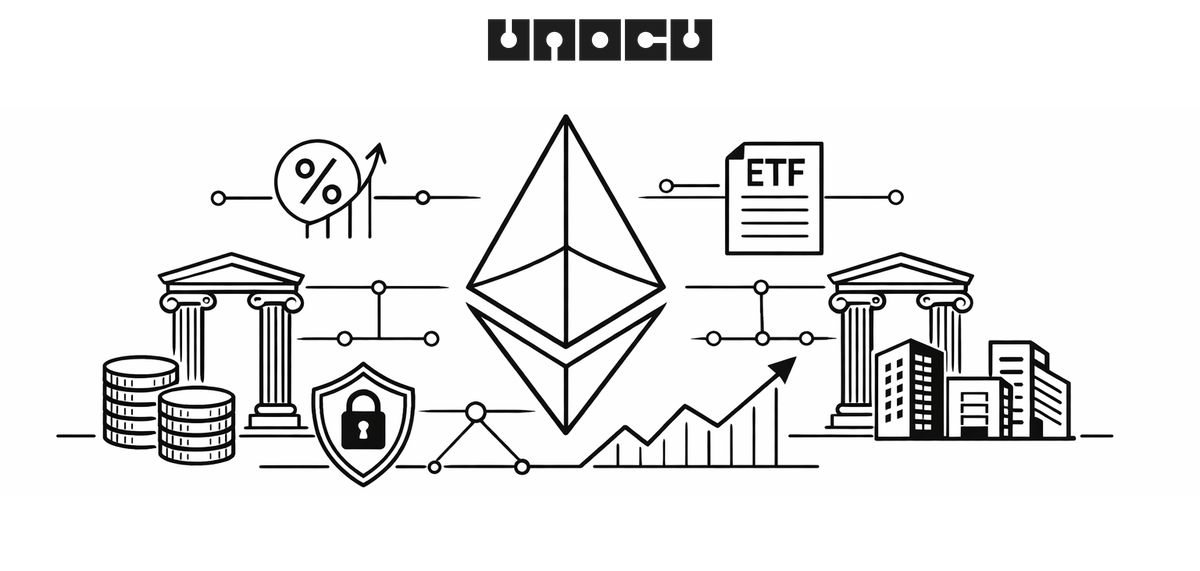
Yet the fundamental case for ETH as the institutional anchor of a crypto treasury has never been stronger. Spot ETFs now hold $12.3 billion in assets under management. More than 34 million ETH — over $100 billion — is staked. The stablecoin market, overwhelmingly Ethereum-native, has reached $316 billion. The infrastructure is not coming. It is here.
This note examines why ETH remains the asset where institutional capital is most comfortable, and why that matters more than short-term price action.
The Institutional Comfort Zone
When a pension fund, endowment, or corporate treasury evaluates crypto exposure, ETH is typically the first or second asset they consider after Bitcoin. The reason is not sentiment. It is infrastructure.
The Ethereum spot ETF landscape now includes products from BlackRock, Fidelity, and other major asset managers. BlackRock's ETHA alone has attracted $11.9 billion in cumulative inflows. Total cumulative net inflows across all Ethereum ETFs stand at approximately $11.7 billion. This is not experimental allocation. This is institutional infrastructure being built in real time.
The broader context reinforces this:
• Regulated staking is available through institutional-grade providers including Coinbase, Lido, and Rocket Pool, giving treasuries a yield pathway that compliance teams can approve.
• Ethereum is the most battle-tested smart contract platform in existence, with over a decade of continuous operation and the broadest DeFi ecosystem for yield opportunities.
• ETHConf 2026, scheduled for June 8-10 in New York with over 8,000 expected attendees and 150 speakers, is centred squarely on institutional adoption — a signal of where traditional finance is heading.
The institutional comfort zone is not about excitement. It is about explainability. ETH is the crypto asset you can defend in a board presentation, justify to an auditor, and explain to a regulator.
The Stablecoin Story
This may be the most underappreciated bull case for Ethereum.
The stablecoin market has reached $316 billion, and the overwhelming majority of that value runs on Ethereum. USDT commands a $184 billion market cap (58% share), while USDC holds $79 billion. Both are primarily Ethereum-native. Stablecoins are the on-ramp for every institutional crypto transaction — payments, settlements, treasury operations, and DeFi participation.
The mechanics here are direct. Every stablecoin transaction on Ethereum burns ETH through EIP-1559, creating deflationary pressure on supply. As stablecoin adoption grows — driven by payments, remittances, and institutional settlement — Ethereum benefits directly.
The network effect is self-reinforcing: more stablecoins drive more on-chain activity, which burns more ETH, which tightens supply, which supports price. Ethereum recently set user records despite its price lagging behind network growth. That divergence between usage and price is worth paying attention to.
Yield That Institutions Understand
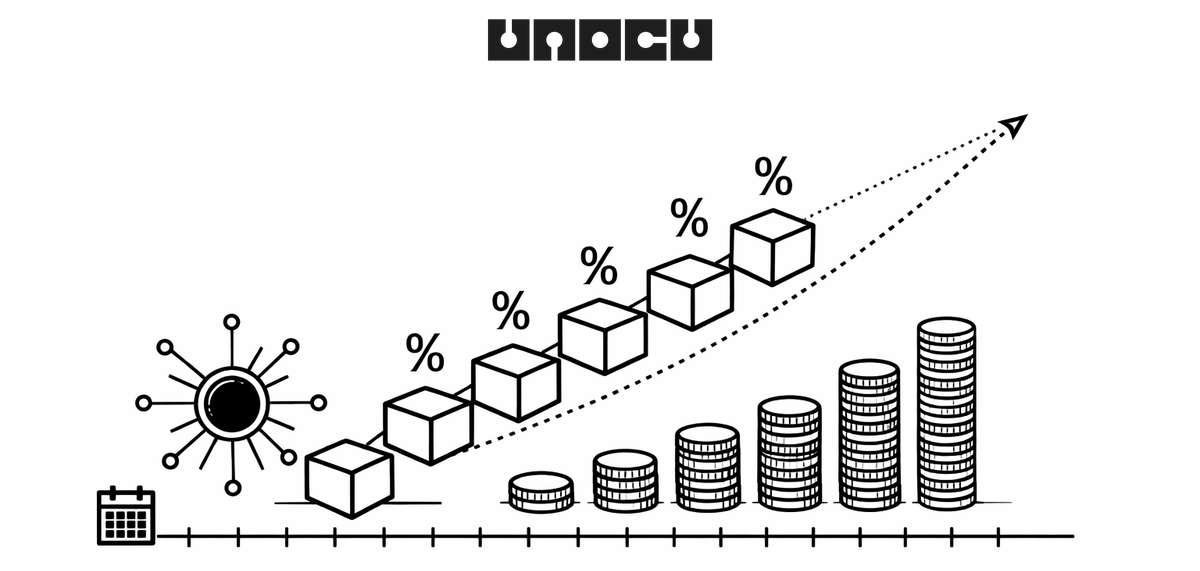
ETH staking yields currently range from approximately 3% to 5% annually, depending on the method. Solo staking offers 4-5% APY. Liquid staking through Lido's stETH yields roughly 3.5-4%, Rocket Pool's rETH approximately 2.3-2.5%, and Coinbase's cbETH around 1.9-2.9%.
These yields are lower than what Solana offers (approximately 6%), but they come with characteristics institutions value:
• The yield is protocol-level. It comes from securing the network, not from lending risk or DeFi exposure. This distinction matters to compliance teams.
• Liquid staking through regulated providers means capital is not locked. Treasury managers maintain liquidity while earning yield.
• With over $100 billion in staked ETH, the staking market is deep and liquid — not a niche experiment.
For a corporate treasury, earning 3-5% on ETH while maintaining liquidity through liquid staking tokens is a straightforward, explainable position. Compare that to a treasury sitting in a traditional bank account earning near-zero interest. The risk profile is different, but the yield conversation has shifted permanently.
Our ETH Outlook
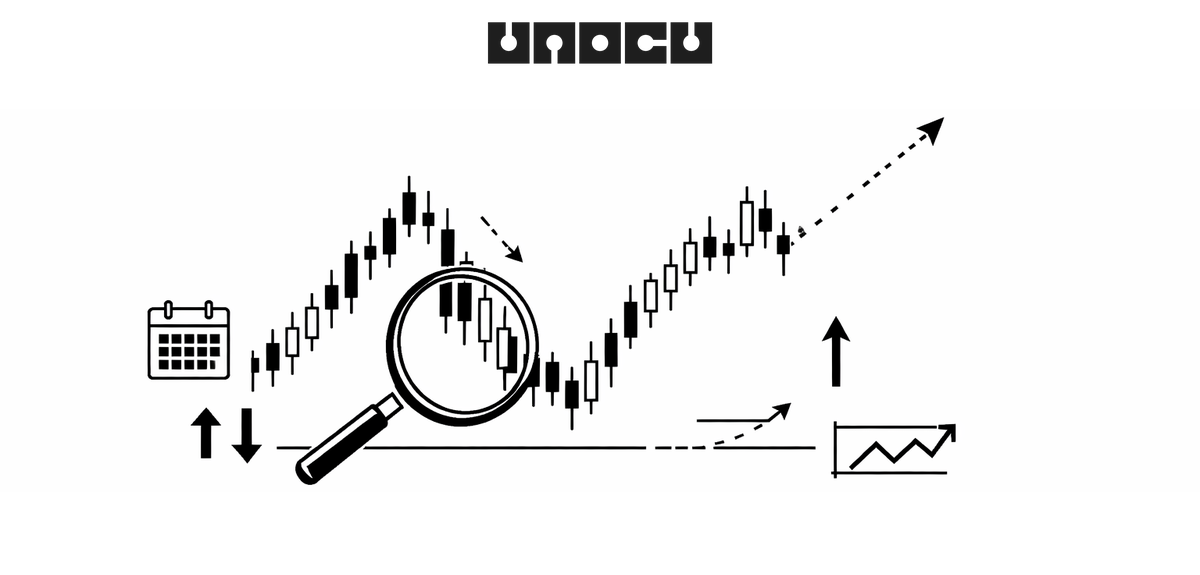
ETH follows the same broad macro pattern we observe across major crypto assets — a growth window through mid-year, a correction into Q4, and long-term recovery. Here is how we see the key periods:
Near-term (May through July): We expect ETH to participate in the broader growth window. Our target range is $3,000 to $3,500. Institutional ETF inflows should accelerate during this period as risk appetite returns and new allocators enter through regulated vehicles.
November bottom: Midterm election uncertainty in the United States will pressure all risk assets. ETH is not immune, though it may hold up better than higher-beta altcoins. Our range for a potential trough is $1,200 to $1,600.
Long-term (2027-2028): We see ETH working back toward and potentially exceeding its all-time high with $10,000 being the most achievable target. Standard Chartered has published a $4,000 target for 2026 and a $40,000 target by 2030. The near-term target may prove aggressive given political headwinds, but the long-term trajectory, driven by institutional adoption and stablecoin growth, is clear.
The institutional adoption curve for ETH is still in its early stages. Price will follow network value, and network value continues to grow.
ETH as Treasury Foundation
For treasury managers building crypto exposure, ETH serves a specific and deliberate role. It is not the highest-growth asset in a diversified portfolio — that role belongs to assets like SOL. But it is the most defensible position.
• ETH is the institutional-grade base layer — the asset you hold when you need to explain your crypto position to a board, an auditor, or a regulator.
• Staking provides predictable, protocol-level yield that does not depend on third-party lending risk.
• Stablecoin exposure through USDC and USDT provides stability and liquidity, and it runs on Ethereum's network.
• DeFi opportunities — lending, liquidity provision, structured products — are most mature on Ethereum.
A well-constructed crypto treasury uses BTC for store of value, SOL for growth exposure, and ETH as the institutional bridge between traditional finance and on-chain yield. Each asset has a role. ETH's role is defensibility.
What This Means for Your Treasury
UNOCU's platform is designed to help you build and manage ETH positions with the same rigour you apply to traditional treasury management.
• Use Obtain to research ETH's on-chain metrics, staking yields, and institutional flows before making allocation decisions.
• Use Compound to track staking rewards from Lido stETH, Rocket Pool rETH, and Coinbase cbETH — UNOCU supports all three.
• Use Nurture to model how ETH positions contribute to your self-sufficiency score over time.
• Use Umbrella to see ETH alongside your full treasury — exchanges, cold wallets, and staked positions in a single view.
As always: do not fall in love with any position. Use profits strategically and reinvest into yield-generating positions that compound your treasury's growth.
Ethereum is not the flashiest asset in a crypto treasury. It will not generate the most dramatic returns in any given quarter. But when you assess the combination of institutional infrastructure, stablecoin dominance, protocol-level yield, and regulatory clarity, ETH may be the most important position you hold.
The price is down. The fundamentals are not. For treasury managers thinking in years rather than weeks, this is exactly the kind of environment worth paying attention to.
For more from UNOCU Research, visit unocu.com.
Disclaimer: This content is for informational purposes only and does not constitute financial, investment, or trading advice. Crypto assets are highly volatile. Past performance is not indicative of future results. The views expressed are those of the author and do not constitute a recommendation to buy or sell any asset. Always conduct your own research before making investment decisions.