The Numbers Don't Lie — VC Is Failing Its Own Investors
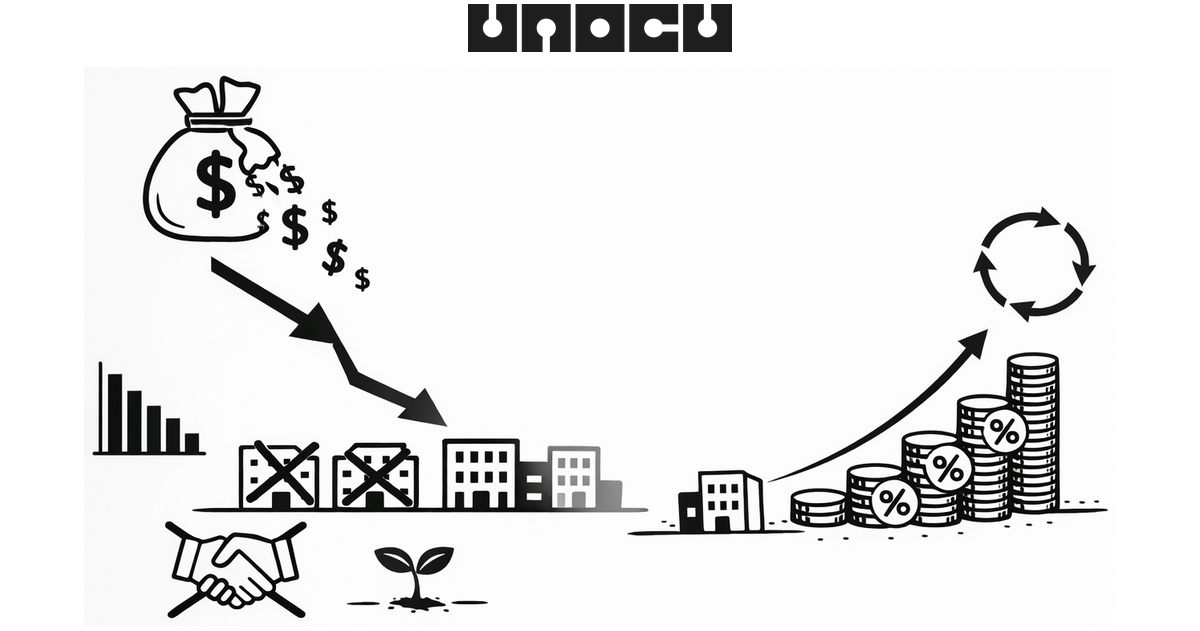
US venture capital fundraising fell 35% in 2025, to just $66 billion. That is the lowest figure in over a decade and a 70% decline from the 2022 record, according to the Wall Street Journal. Ninety percent of VC funds are struggling to raise capital. Fund mortality is brutal: 50% of firms never make it from Fund 1 to Fund 2, and only 20% survive to Fund 4. Fundraising for emerging managers now routinely takes more than two years.
The performance numbers are worse. PitchBook data shows that 2021 vintage funds have delivered negative pooled IRR — meaning investors would have been better off in a savings account. Over the same period, the S&P 500 returned 12.3% annualized. Only 20% of 2020 vintage funds have distributed anything back to limited partners. And 50% of funds from 2019 — six years ago — have failed to return a single dollar to LPs, according to analysis from Carta and NuFund.
DPI — distributions to paid-in capital, the metric that actually measures real money returned — remains near zero for 2021 and 2022 vintage funds. Remaining value at the 10-year mark is often distributed at what PitchBook calls "materially discounted rates." Even the median pooled IRRs for 2015-2017 vintages, which look respectable at around 17%, came primarily from paper valuation growth, not actual cash distributions.
LPs are asking a straightforward question: why am I in this asset class? When lower-middle-market private equity delivers 15-23% net IRR with less volatility, faster liquidity, and actual distributions, the case for venture is eroding fast. Funds over $500 million now control more than half of all venture dry powder despite representing a tiny fraction of fund closures. Capital is concentrating at the top, and the rest of the ecosystem is starving.
The Startup Side Is Just As Broken
If you are a startup founder, the picture is equally bleak. Carta's data shows that only 15.4% of seed-stage startups from Q1 2022 made it to a Series A within two years. The time between seed and Series A has stretched to over two years on average. And when companies do raise, many of them are not raising real rounds — 43% of Series A rounds in 2024 were bridge rounds, according to Carta. Startups extending runway. Delaying real funding. Surviving, not growing.
Flat and down rounds hit the highest level in over a decade, with more than 26% of completed deals in Q1 2025 being flat or down, per PitchBook. Late-stage startup valuations have declined by up to 40%. US startup funding slowed dramatically in March 2026 — just $13 billion compared to a massive February, according to Crunchbase.
And here is the uncomfortable truth: AI now accounts for roughly 71% of venture deal value and a third of all deals. If you are not building AI, the capital is simply not there. The system that was supposed to fund innovation across every sector is now funding one category and leaving everything else to fight over scraps.
The Money Went to the Top — And Stayed There
A small handful of AI companies raised an outsized share of total venture dollars in 2025. OpenAI's $110 billion round. Anthropic at $30 billion. Waymo at $16 billion. These mega rounds suck up the oxygen in the market. Combined with the fact that funds over $500 million control half of all dry powder, the result is a two-tier market: a handful of companies get everything, and thousands get nothing.
Emerging fund managers — the ones most likely to find the next generation of breakout companies — cannot raise. The traditional venture model of seed to Series A to B to C to exit is fragmenting. Capital is concentrating in fewer hands, backing fewer companies, at higher valuations.
This is not a funding model. It is a lottery. And the odds are getting worse.
Cap Table Gridlock — Success Becomes the Constraint
Even the supposed "winners" are stuck. As Fortune reported in March 2026, unicorns are trapped with too many investors, competing agendas, and cap tables so layered with liquidation preferences and anti-dilution provisions that forward progress is paralyzed.
IPOs are delayed. Acquisitions are slowing. The value is, as PitchBook puts it, "stuck inside the funds." LPs wait. Founders wait. Employees with stock options wait. Everyone waits for a liquidity event that may never arrive.
The math tells the story. 2022 vintage funds have deployed only 43% of committed capital at the 24-month mark — the lowest deployment rate in years, according to Carta. Money raised but not invested. Companies funded but unable to exit. Returns reported but not distributed. The entire system is in gridlock, from LP commitments all the way down to founder equity.
What If You Didn't Need Any of This?
The cost to build a company has collapsed. A Mac mini, AI coding tools, and cloud services. A small team can ship a real product on a modest budget. The infrastructure that used to require millions in upfront capital now costs thousands per month.
This changes the equation entirely. If a startup can generate revenue — even modest revenue — and allocate a portion of that revenue to a crypto treasury that earns yield through staking and compound interest, it can extend its runway indefinitely. No equity given up. No term sheets negotiated. No cap table gridlock created.
The feedback loop is simple:
•Build product and generate revenue
•Allocate a portion to a crypto treasury
•Earn yield through staking (3-6% APY)
•Use yield to cover operating expenses
•Extend runway and keep building
No LPs. No term sheets. No cap table gridlock. No waiting 14 years for a fund to return capital. Your company is the one generating the returns — directly, to itself.
We built UNOCU because this model needed a system. Treasury management for startups that want to build with discipline instead of dependency. A dashboard that treats crypto treasury allocation with the same rigour as a traditional bank account.
This Is Not Theoretical — It's Already Happening
Companies are already holding BTC, ETH, and SOL on their balance sheets. Staking at 3-6% APY. Using stablecoins for payments and settlements. The infrastructure exists. The yields are real. The regulatory frameworks are maturing.
What has been missing is the operational layer — the system that lets a startup manage this with the same confidence and control it expects from its banking relationship. Track allocations. Monitor yields. Model scenarios. Manage risk. That is what unocu.com provides.
The question is no longer whether crypto treasury strategies work. They do. The question is whether founders are willing to adopt a different mental model — one where the company funds itself rather than depending on external capital that may never arrive.
The End of Dependency
Venture capital is not going to disappear. Some companies need large amounts of capital quickly, and venture serves that purpose. Frontier AI research, deep biotech, hardware — these are capital-intensive problems where venture makes sense.
But the idea that every startup needs venture capital to survive? That era is ending. The data makes the case. Fundraising has collapsed. Fund returns are negative. Half of all funds from six years ago have not returned a dollar. Startups are stuck in bridge round purgatory. Cap tables are gridlocked. And most of the money is flowing to a handful of AI companies that do not need it.
The tools exist. The yields are real. The math works. The only question is whether founders are willing to build with discipline instead of dependency.
Visit unocu.com to start building your treasury.
Disclaimer: This content is for informational purposes only and does not constitute financial advice. The views expressed reflect publicly available industry data and the opinions of the UNOCU team. Always conduct your own research before making investment decisions.